Key takeaways
- One call. Say three things: it was a car crash, the date, and where you hurt. Take the earliest opening.
- The first visit at Missouri Injury Clinic is an exam, written findings, and a treatment plan you leave with.
- Bring the crash date, any ER paperwork, your insurance card, and, if you already have an attorney, their contact so records can be sent where they need to go.
- Every office is closed 12 to 2 daily. Hazelwood and Tesson Ferry run Monday to Thursday 9 to 6 and Friday 9 to 12. O'Fallon runs Monday, Tuesday, Thursday 9 to 6, with Wednesday and Friday by appointment.
- Red flags tonight mean the emergency room first. The clinic is the step after the ER says you are stable.
The distance between the wreck and the exam should be days, not weeks. Most of what makes it weeks is not logistics. It is the quiet assumption that getting examined is a big step that requires a decision about something else first: an insurer, a claim, an attorney, whether you are really hurt enough. None of that is required. Here is exactly how to close the distance.
Step one: make one call
Missouri Injury Clinic keeps three offices in the St. Louis metro. South County is at 11144 Tesson Ferry Road, Suite 200, (314) 530-5480, and is the closest office for most readers of this desk. North County is at 14 Village Square Shop Ctr in Hazelwood, (314) 627-1411. Lake St. Louis is at 2163 West Terra Lane in O'Fallon, (636) 280-0990. The offices page lays out hours side by side.
Say three things: it was a car crash, the date it happened, and where you hurt. If your head has felt off, fog, light, word-finding, say the word head. Ask for the earliest opening. That is the whole call. Nobody needs a claim number, a police report, or a decision from you about anything.
Step two: the packing list
The crash date, and the time if you remember it. Any emergency room or urgent care paperwork, including discharge instructions and imaging reports. Your insurance card. A short honest list of what hurts and when it started, because by the appointment your memory of Tuesday will be fuzzier than you think. If you already have an attorney, bring their contact so records can be sent where they need to go. If you do not, you do not need one to be seen.
Ask the clinic directly how a visit is billed and what they accept. This desk does not publish payment terms for a clinic it does not own and will not describe an arrangement it cannot verify.
Chest pain, a sudden severe headache, weakness or numbness on one side, trouble speaking, a loss of bowel or bladder control, or a head injury with vomiting or worsening confusion is an emergency room trip right now, not a call to a clinic. An injury clinic is built for planned care. If a clinic sends you to an emergency room instead of booking you, that is the system working, not a wasted trip.
Step three: the visit itself
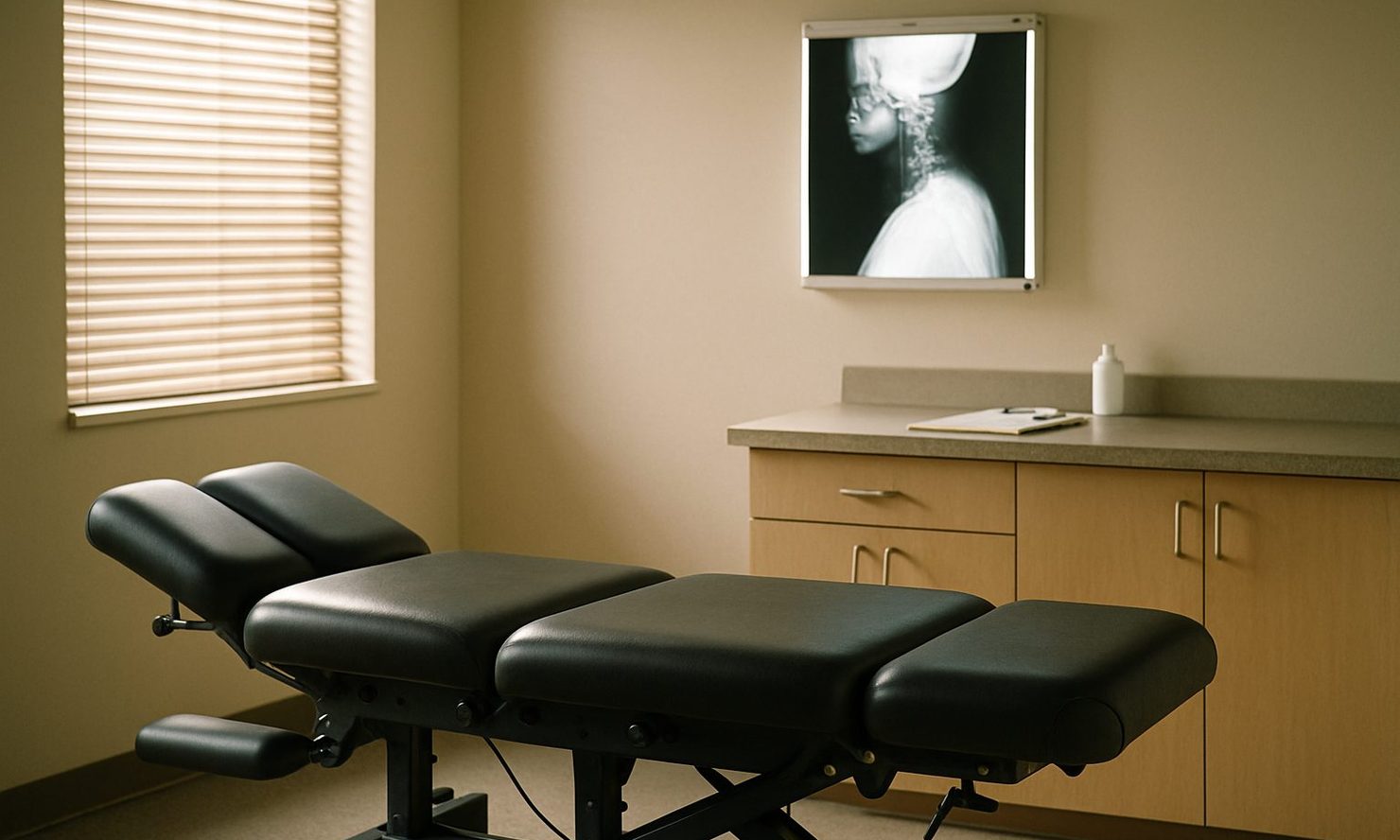
A history first. What happened, from which direction, whether you had warning, where your head was, what you struck, and what has hurt since. Then a physical exam of the neck, the upper back, and the head if the head was involved. Then findings, on paper, dated. Then a treatment plan you can repeat out loud, and a straight answer about whether this is the right office or whether you need imaging, a referral, or a different specialty.
Ask the questions plainly: what did you find, what is the plan, how long before we should expect a change, and what would make you send me somewhere else. A clinician who cannot answer those is not handing you a record worth keeping. Joseph L. Hollingsworth, DC, is a chiropractor, and the lane you are walking into is the one his clinic publishes as auto injuries: diagnosis and a treatment plan after a crash.
What the visit is not
It is not a legal consultation. Nobody at the clinic will tell you what to do about a claim, and this desk will not either. It is not a commitment to anything beyond the plan you are handed, which you are free to ask hard questions about. It is not a place where you need to perform being hurt. Say what hurts, say what does not, and let the exam do the measuring.
And it is not the emergency room. If the symptoms in the box above describe you tonight, the clinic is tomorrow's problem. Go now.
The one move
Three things to say. One afternoon.
It was a car crash. Here is the date. Here is where it hurts. Take the earliest opening at the office you can drive to this week.
Missouri Injury Clinic, Joseph L. Hollingsworth, DC. Hazelwood, Tesson Ferry, and O'Fallon. Every office is closed 12 to 2.
After the first visit
You leave with a plan and a date. Follow the plan. Keep the two-line daily log going, because it makes the next visit faster and more honest. If something changes sharply for the worse between visits, call; if it is one of the emergency symptoms, do not call, go. The record you started on day two or three is now the baseline everything gets measured against, and that is the entire reason this desk exists: to get you from the shoulder of the road to that office in days, not weeks.